
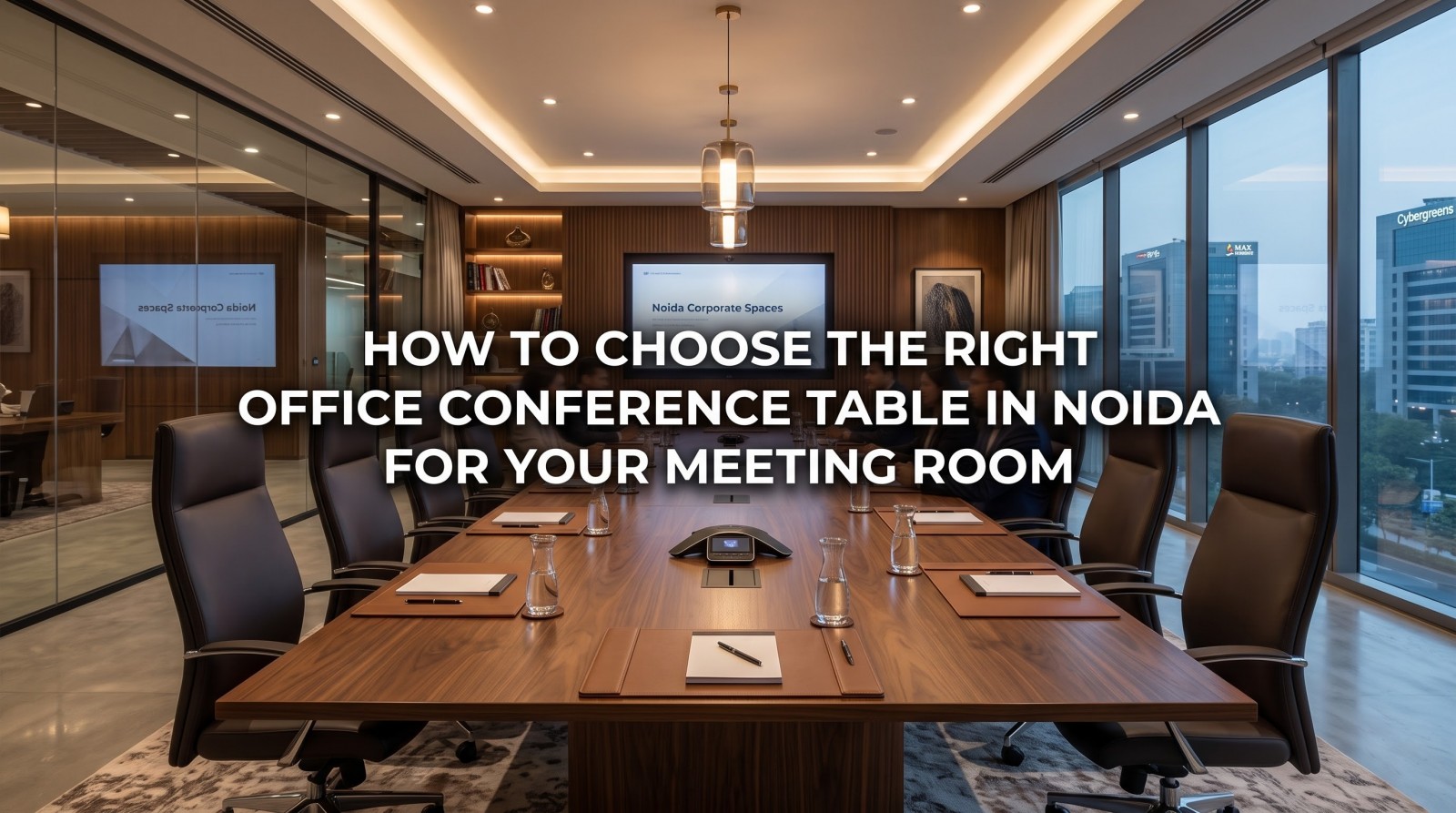
Every office has one space where the real decisions happen — the conference room. It’s where teams brainstorm, clients are pitched to, and leadership sets direction. And at the center of it all sits one piece of furniture that quietly shapes how those conversations go: the conference table.
If you’re setting up or upgrading a meeting room, choosing the right office conference table in Noida is not just about picking something that looks good in a catalogue. It’s about matching the table to your space, your team size, your work style, and the impression you want to leave on clients and employees alike. Here’s a practical guide to help you get it right.
1. Start With Room Size and Layout
Before you fall in love with a design, measure your room. A common mistake businesses make is buying a conference table that looks great online but overwhelms — or underwhelms — the actual space.
As a rule of thumb, leave at least 3 to 4 feet of clearance around the table on all sides so people can move chairs back, walk around comfortably, and access presentation screens or whiteboards without feeling boxed in. A cramped conference room, no matter how premium the table, ends up feeling uncomfortable rather than professional.
2. Know Your Seating Capacity
Think about how the room will actually be used:
- Small huddle rooms (4–6 people): Compact rectangular or oval tables work best for quick team syncs and one-on-ones.
- Mid-size meeting rooms (8–12 people): Boat-shaped or rectangular tables strike a good balance between space efficiency and a collaborative feel.
- Boardrooms (12+ people): Larger rectangular or racetrack-shaped tables project authority and give everyone enough table space for laptops, notepads, and documents.
If your team frequently switches between small check-ins and larger client presentations, consider modular conference tables that can be reconfigured or extended based on the meeting size — a solution companies like Viak Group specialize in with their modular office furniture systems.
3. Choose the Right Material and Finish
The material of your conference table affects durability, maintenance, and the overall vibe of the room.
- Wood/veneer finishes give a warm, executive, and traditional look — ideal for boardrooms and client-facing spaces.
- Laminate tables are budget-friendly, easy to maintain, and available in a wide range of finishes — great for growing startups.
- Glass-top tables create a sleek, modern, minimalist look but require more upkeep to stay smudge-free.
- Metal-framed tables offer an industrial, contemporary aesthetic and tend to be more durable for high-traffic offices.
Think about your brand identity here — a fintech startup and a law firm will likely want very different finishes for their office conference table in Noida.
4. Don’t Overlook Cable Management
In a world of laptops, projectors, video conferencing setups, and charging cables, a conference table without proper cable management quickly turns messy. Look for tables with:
- Built-in cable trays or grommets
- Power and USB port integration
- Concealed wiring channels
This small detail makes a big difference in keeping your meeting room clean, functional, and tech-ready — especially important for hybrid teams that rely heavily on video calls.
5. Match the Table to Your Company Culture
A conference table also communicates something about how your company operates:
- Round or oval tables suggest collaboration and equality — good for creative teams and agile workplaces.
- Rectangular tables with a clear head seat suit hierarchical, client-facing, or formal business environments.
- U-shaped or modular configurations work well for training sessions and interactive workshops.
There’s no universally “correct” shape — the right one depends on how your team actually works together.
6. Prioritize Comfort and Ergonomics
Long meetings mean people will be seated for extended periods. A good conference table should be paired with ergonomic chairs and have enough legroom underneath — ideally 24–30 inches of table height clearance for comfortable seating.
7. Factor In Customization and Local Support
One advantage of sourcing your office conference table in Noida locally rather than through a generic online marketplace is the ability to customize dimensions, finishes, and configurations to fit your exact office layout — and to get after-sales support without long shipping delays.
This is where working with an established modular office furniture manufacturer makes a real difference. Viak Group, based in Greater Noida, is known for designing and manufacturing conference tables and modular furniture solutions tailored to the specific needs of offices across Delhi NCR. Their tables are built to be assembled and reconfigured with ease, making them a practical choice for businesses that expect to scale, renovate, or redesign their meeting spaces down the line.
8. Set a Realistic Budget
Conference tables can range widely in price depending on size, material, and customization. Rather than choosing the cheapest option, think about long-term value — a durable, well-made table will outlast several cycles of cheaper alternatives and continue looking professional for years.
Final Thoughts
Choosing the right conference table isn’t just a furniture decision — it’s an investment in how your team collaborates and how your business presents itself to clients and partners. By considering room size, seating capacity, material, cable management, and your company’s working style, you can find a table that works as hard as your team does.
If you’re looking for a reliable office conference table in Noida, it’s worth partnering with a manufacturer that understands both design and functionality. Viak Group offers a range of modular conference tables designed for modern workspaces across Noida, Delhi, and Gurgaon — combining durability, ergonomic design, and customization to help you build a meeting room that truly works for your business.