
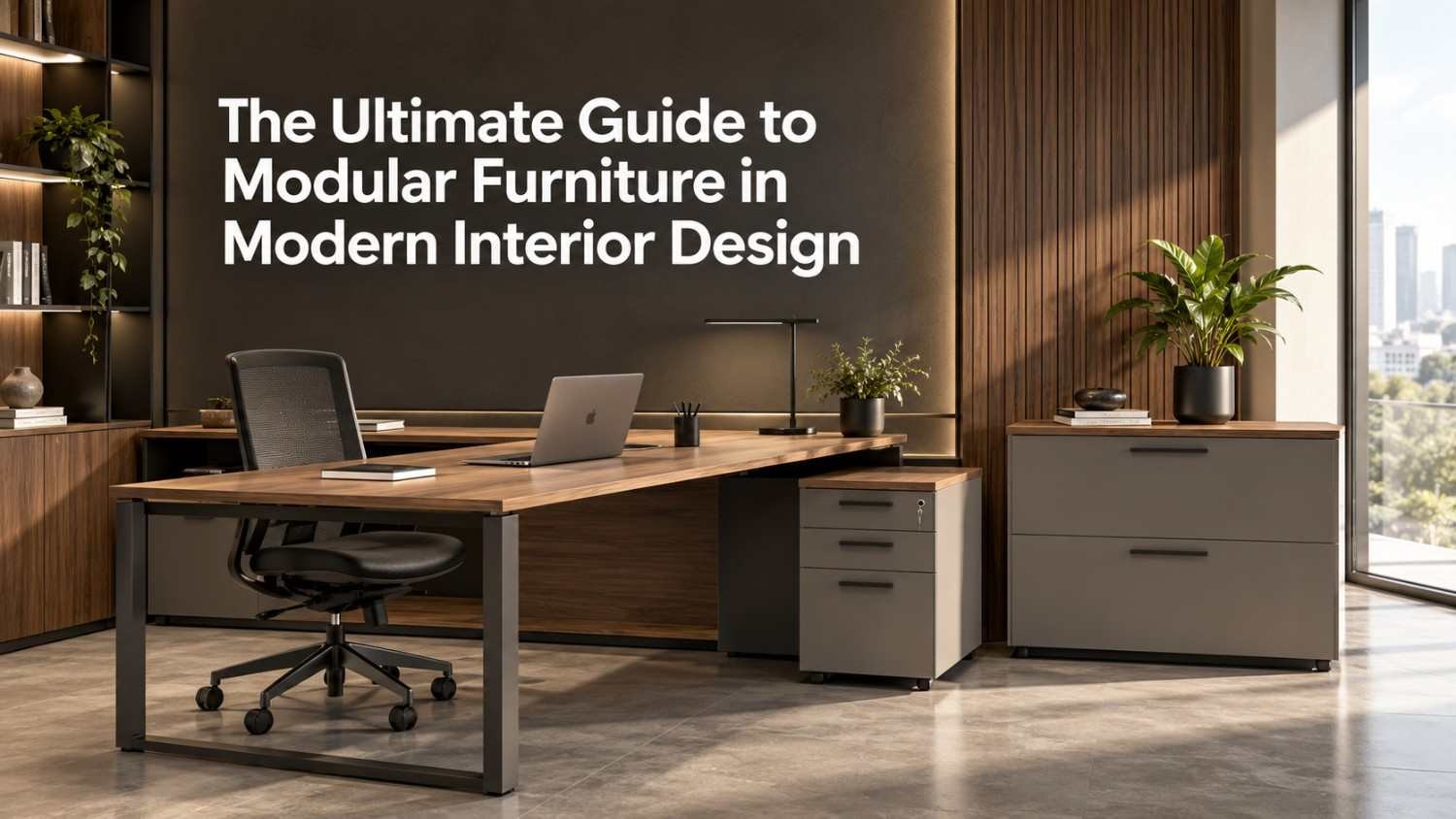
Modular furniture has quietly become one of the most powerful forces shaping modern interiors. From compact city apartments to sprawling corporate offices, more homeowners, designers, and businesses are turning to modular systems to solve a problem traditional furniture simply can’t: the need for spaces that adapt as fast as life does.
This guide breaks down everything you need to know about modular furniture — what it is, why it matters, how to choose it, and how manufacturers like Viak Group are shaping the future of modular interiors.
What Is Modular Furniture?
Modular furniture refers to pieces built from standardized, interchangeable components rather than a single fixed structure. Sections — seats, desks, storage units, partitions — can be added, removed, combined, or rearranged to fit a specific space or need.
Unlike traditional furniture, which is built as one permanent shape, modular furniture is designed for change. A modular sofa can be reconfigured into a different layout. A modular desking system can expand as a team grows. This flexibility is exactly what makes modular furniture so relevant to how people actually live and work today.
Why Modular Furniture Matters More Than Ever
1. It Adapts to People, Not the Other Way Around
Instead of forcing people to plan their lives around fixed furniture, modular systems flex around real routines — whether that’s a family’s changing needs or a business’s evolving workflow.
2. It Makes the Most of Limited Space
As homes and offices shrink in size, especially in dense urban areas, modular furniture helps designers use every square foot efficiently without sacrificing comfort or style.
3. It Supports Clean, Minimalist Design
Modular pieces are built to fit together with precision, which naturally supports the clean lines and clutter-free aesthetic that define modern interior design.
4. It Enables Multi-Purpose Spaces
A home office that becomes a guest room. A meeting room that turns into a breakout space. Modular furniture makes rooms with more than one purpose genuinely functional.
5. It Brings Customization Within Reach
Because modular systems are made of interchangeable parts, customization is no longer reserved for high-budget projects. Homeowners and businesses alike can mix finishes and configurations to create something that feels uniquely their own.
6. It Scales With Growing Businesses
Offices that need to expand, restructure, or downsize can do so in days rather than months when their furniture is modular by design — a major advantage for fast-moving companies.
7. It Reduces Waste
Because individual components can be repaired or replaced instead of the whole piece being discarded, modular furniture generates significantly less waste over its lifetime — a meaningful step toward more sustainable interiors.
Where Modular Furniture Is Making the Biggest Impact
- Residential Spaces – Modular sofas, wardrobes, and storage systems help homeowners maximize compact living areas without compromising on style.
- Office Interiors – Modular desking, conference tables, and glass partitions let businesses build workspaces that evolve with organizational needs.
- Hospitality & Cafés – Modular seating gives restaurants and cafés the flexibility to rearrange layouts for different group sizes and events.
- Healthcare Facilities – Modular furniture supports easy cleaning, quick reconfiguration, and long-term durability — essential in medical environments.
- Educational Institutions – Modular classroom furniture allows spaces to shift between group work, exams, and individual study with ease.
How to Choose the Right Modular Furniture
1. Look beyond the first layout. The real value of modular furniture is in how easily it can be reconfigured after it’s already in use — not just how it looks on day one.
2. Prioritize build quality. Because modular pieces are moved and reassembled repeatedly, materials and joinery need to be strong enough to handle it without wearing down.
3. Choose a design language that fits your space. Modular doesn’t have to mean industrial. The best modular systems today come in finishes suited to everything from minimalist homes to formal corporate interiors.
4. Plan for future growth. Whether it’s a growing family or an expanding team, choosing modular furniture with room to scale avoids costly redesigns down the line.
5. Partner with an experienced manufacturer. The difference between modular furniture that truly works and furniture that’s “modular” in name only often comes down to who built it.
How Viak Group Is Shaping Modular Interiors
This is exactly where Viak Group comes in. As modular furniture continues to redefine homes, offices, and institutional spaces, Viak Group has positioned itself as a manufacturer that understands both the technical and design sides of this shift.
Viak Group’s portfolio spans desking systems, director’s desks, conference tables, glass partitions, soft seating, and metal series furniture — each designed around the core principles that make modular furniture so valuable: flexibility, efficiency, and timeless design.
What sets Viak Group apart is the balance between craftsmanship and adaptability. Every piece is built with attention to detail and made to last, while still offering the reconfigurability that modern spaces demand. This combination of durability and flexibility is precisely what today’s interior designers and businesses are looking for.
With over 50 turnkey projects completed across a diverse range of industries, Viak Group has proven its ability to deliver modular interior solutions at scale — from single-room setups to complete office fit-outs.
The Future of Modular Furniture
As modular design continues to mature, expect to see even greater emphasis on flexibility — furniture systems that reconfigure not occasionally, but as part of everyday use. Smart integration, sustainable materials, and deeper customization are already shaping what comes next.
Manufacturers who can combine thoughtful design with genuine craftsmanship — like Viak Group — will continue to play a central role in how homes and workplaces are built for the future.
Final Thoughts
Modular furniture is no longer a niche or industrial-only solution — it’s a mainstream design standard built around flexibility, efficiency, and long-term value. Whether you’re furnishing a compact apartment, a scaling office, or a healthcare facility, modular systems offer a level of adaptability traditional furniture simply can’t match.
If you’re planning a home or office interior that needs to be as functional as it is stylish, exploring modular furniture — and working with an experienced manufacturer like Viak Group — is the smart place to start.
Explore Viak Group’s modular furniture solutions at www.viakgroup.com