
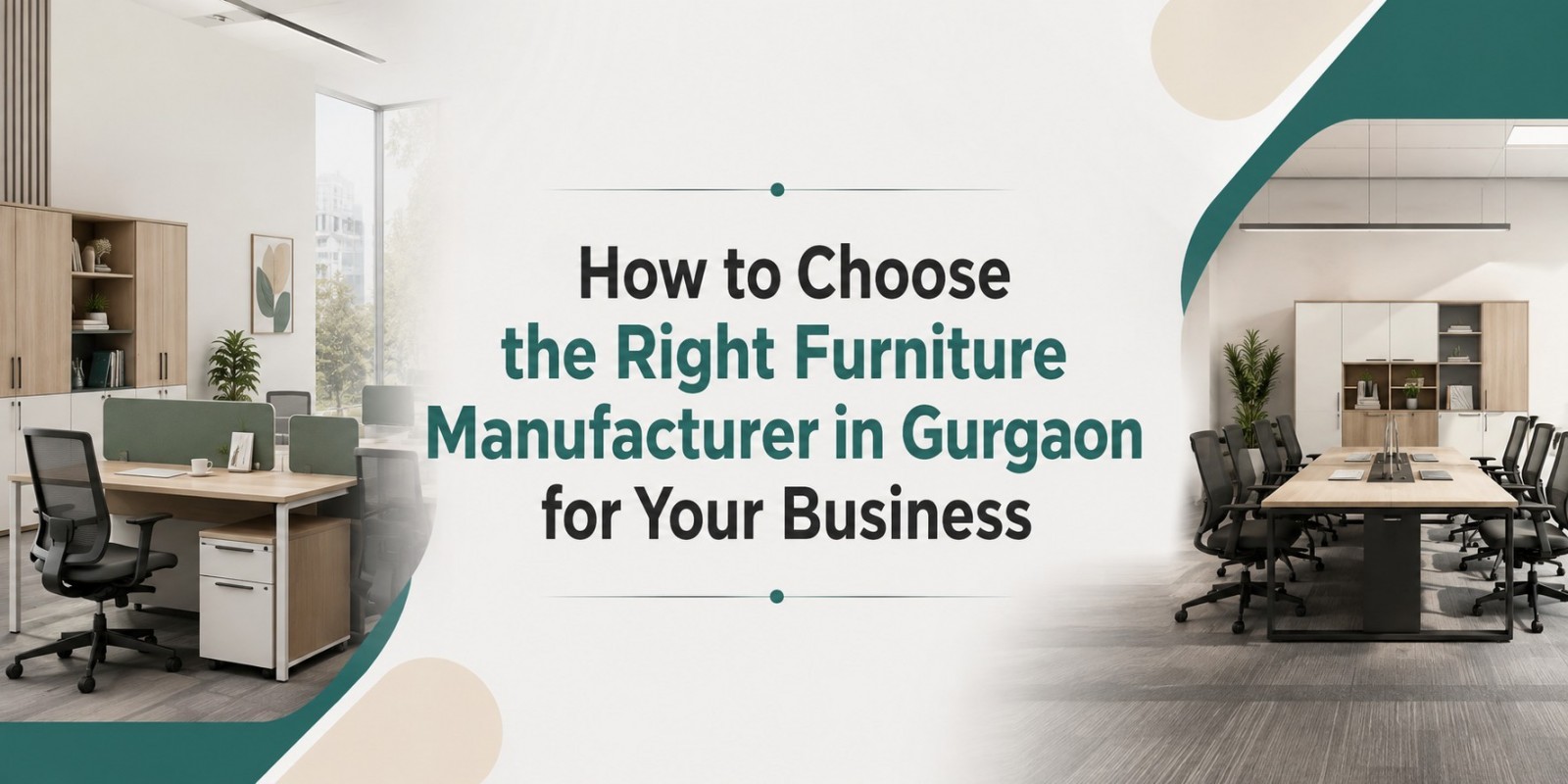
Gurgaon has become one of India’s busiest corporate hubs, home to everything from Fortune 500 offices to fast-scaling startups. With this growth comes a genuine, practical need: businesses want workspaces that look professional, function efficiently, and reflect the culture they’re building. And at the centre of that need sits one important decision — choosing the right Furniture Manufacturer Gurgaon businesses can actually rely on.
It’s easy to underestimate how much this choice affects daily operations. The furniture you select isn’t just about appearance. It influences employee comfort, productivity, space utilisation, and even how clients perceive your brand the moment they walk through the door. Yet many businesses approach this decision the same way they’d pick any vendor — based on price and delivery timelines alone — and end up regretting it a year or two later when furniture wears out, doesn’t scale with the team, or simply doesn’t suit how people actually work.
If you’re currently evaluating a Furniture Manufacturer Gurgaon based, this guide walks you through exactly what to look for, the questions to ask, and the red flags to avoid — using Viak Group, one of the region’s established modular furniture manufacturers, as a practical reference point throughout.
Why the Right Manufacturer Matters More Than You Think
Furniture is a long-term investment. Unlike a lot of business expenses, it isn’t something you replace every year. Desks, workstations, seating, and storage units are expected to serve your team for five to ten years, sometimes longer. That means a poor decision today doesn’t just cost money upfront — it compounds over time in the form of repairs, replacements, and lost productivity.
A capable manufacturer does more than supply furniture. They understand space planning, material durability, ergonomic standards, and how different work styles (focus work, collaboration, hybrid meetings) require different furniture solutions. Choosing well means your office can adapt as your team grows, rather than being locked into a layout that stops working within a year.
1. Look at In-House Manufacturing Capability
One of the first things worth checking is whether the company you’re considering actually manufactures its furniture or simply resells products sourced from third parties.
Businesses with their own manufacturing facility typically offer:
- Greater quality control — since production happens under one roof, defects and inconsistencies are easier to catch and fix.
- Customisation flexibility — a manufacturer with in-house machinery can modify dimensions, finishes, and materials to match your office layout, whereas a reseller is often limited to catalogue options.
- Better turnaround times — no delays caused by coordinating between multiple third-party vendors.
- More competitive pricing — cutting out middlemen usually means better rates for the same quality.
When researching manufacturers, ask directly about their production facility — where it’s located, what kind of machinery they use (edge banders, CNC drilling lines, powder coating plants, etc.), and whether you can visit or view samples before placing a large order. Viak Group, for example, operates its own state-of-the-art manufacturing facility, which allows it to maintain consistent quality across large-scale office fit-outs while keeping customisation and lead times firmly in its own control.
2. Check for Certifications and Compliance Standards
This is a step many businesses skip, but it shouldn’t be overlooked — especially for corporate offices, hospitals, or educational institutions where safety and environmental compliance genuinely matter.
Look for manufacturers who hold recognised certifications such as:
- ISO 9001 for quality management systems
- ISO 14001 for environmental management
- ISO 45001 (or older ISO 18001) for occupational health and safety
These certifications aren’t just paperwork. They indicate that the manufacturer follows consistent quality checks, uses environmentally responsible materials, and maintains safe working conditions during production — all of which eventually reflect in the furniture you receive. Viak Group is a good example of this in practice, holding ISO 9001, ISO 14001, and ISO 45001 certifications, which gives businesses added confidence when signing off on large orders.
3. Evaluate Their Range of Products and Customisation Options
Every business has different furniture needs depending on its industry, team size, and workspace design. A manufacturer that only offers a narrow catalogue may not be able to support you as your requirements evolve.
Ideally, look for a manufacturer capable of delivering across multiple categories, such as:
- Modular workstations and desking systems
- Executive and director’s desks
- Conference and meeting room tables
- Soft seating and lounge furniture
- Glass partitions and modular walls
- Storage and metal series furniture
- Specialised furniture for hospitals, schools, or hospitality spaces
A manufacturer with a wide and flexible product range is generally better positioned to support your office as it grows or as your layout needs change — whether that means adding more workstations, redesigning a breakout area, or setting up a new meeting room. Viak Group covers most of these categories under one roof, which is a big part of why businesses looking for a dependable Furniture Manufacturer Gurgaon wide often prefer working with a single, full-range supplier rather than juggling multiple vendors.
4. Ask About Design and Space Planning Support
Furniture procurement isn’t just about picking items from a catalogue. The best manufacturers get involved early, helping you plan how furniture fits into your actual floor plan.
During initial conversations, pay attention to whether the manufacturer:
- Offers site visits or space assessments
- Provides 3D layouts or mock-ups before production
- Advises on ergonomic seating arrangements and workflow efficiency
- Helps balance private workstations with collaborative or breakout zones
A manufacturer who treats your office as a design problem to solve — not just an order to fulfil — will almost always deliver a better end result.
5. Review Past Projects and Client Portfolio
A manufacturer’s track record tells you a lot about their reliability. Before finalising anyone, ask to see:
- Photos or case studies of completed projects, particularly in your industry
- The scale of projects they’ve handled (number of workstations, seats, or square footage)
- Client references you can speak with directly
- How long they’ve been operating and how many installations they’ve completed
A manufacturer with a strong, varied portfolio — spanning corporate offices, banks, hotels, media houses, and educational institutions — is more likely to understand the nuances of different work environments and deliver furniture that’s genuinely fit for purpose. Viak Group, for instance, has completed thousands of installations across such sectors, backed by more than a decade of experience in the industry.
6. Understand Delivery Timelines and After-Sales Support
Furniture procurement for a growing office is rarely a one-time transaction. You’ll likely need repairs, replacements, or additions down the line. Before signing a contract, clarify:
- Standard production and delivery timelines for your order size
- Whether installation and assembly are included
- Warranty terms on materials and workmanship
- How they handle post-installation issues (loose fittings, damaged panels, etc.)
- Whether they offer a service network across multiple cities, in case you expand to new locations
A manufacturer with a pan-India presence and dedicated service backup will save you significant headaches if your business operates from more than one city. Viak Group maintains display centres and service support across Delhi NCR, Mumbai, Pune, Bangalore, Hyderabad, and Chennai, making it easier for multi-location businesses to maintain consistency across offices.
7. Consider Sustainability Practices
Sustainability has moved from being a “nice-to-have” to a genuine business priority for many organisations, especially those with ESG commitments or corporate clients who evaluate vendors on environmental practices.
Ask potential manufacturers about:
- The materials they use and whether they’re sourced responsibly
- Their waste management and recycling processes during production
- Whether their products meet green building compliance standards (useful if your office is pursuing LEED or similar certifications)
Choosing a manufacturer that takes sustainability seriously isn’t just good for the planet — it can also support your own company’s environmental commitments and reporting.
8. Compare Pricing Transparently — But Don’t Let It Be the Only Factor
Cost obviously matters, but the cheapest quote isn’t always the best value. When comparing manufacturers, request detailed, itemised quotes rather than lump-sum figures. This makes it easier to compare:
- Material quality (particle board vs. plywood vs. MDF, laminate grades, hardware quality)
- Warranty coverage
- What’s included in the price (delivery, installation, after-sales visits)
- Lead times for production and delivery
A manufacturer offering a noticeably lower price than everyone else is worth a closer look — sometimes it reflects genuine efficiency, but other times it signals corners being cut on materials or long-term durability.
9. Gauge Their Communication and Project Management
Large furniture orders involve multiple stages — design, approvals, production, delivery, and installation. Throughout this process, you want a manufacturer who’s easy to reach, responsive to changes, and organised enough to keep the project on schedule.
A quick way to test this before committing: pay attention to how they handle your initial enquiry. Are they prompt with quotes? Do they ask clarifying questions about your space and requirements? Do they proactively suggest solutions, or simply wait for instructions? These early interactions are often a reliable indicator of what working with them will be like at scale.
Final Thoughts
Choosing the right Furniture Manufacturer Gurgaon businesses can depend on isn’t a decision to rush. It’s a partnership that shapes how your office looks, functions, and feels for years to come. By evaluating manufacturing capability, certifications, product range, design support, past work, service backup, sustainability practices, and transparent pricing, you put yourself in a strong position to make a choice you won’t have to second-guess later.
The right manufacturer won’t just deliver furniture — they’ll understand your business, adapt to how your teams actually work, and support you well beyond the initial installation. Companies like Viak Group demonstrate what this looks like in practice: in-house manufacturing, recognised certifications, a broad product range, and a track record built over more than a decade in the industry. Take the time to ask the right questions upfront, and the payoff will show up every single day in a workspace that genuinely works for your people.