
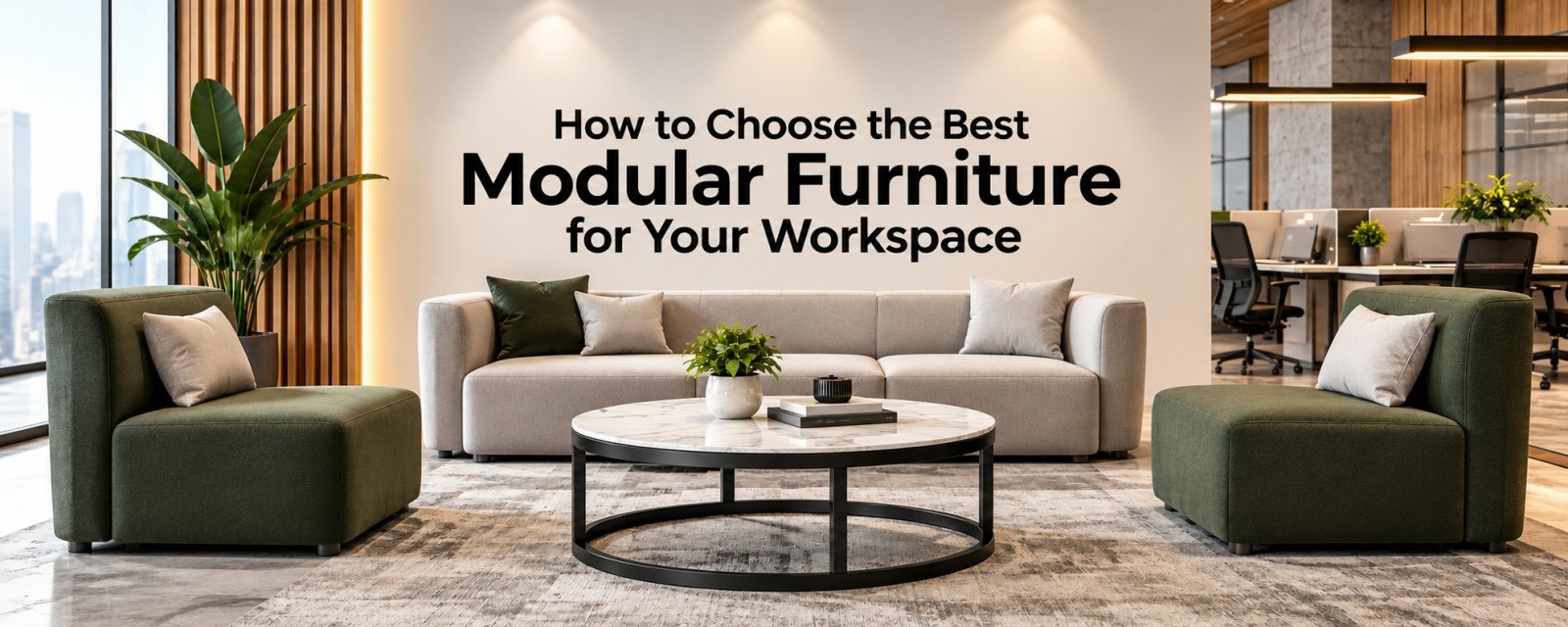
Setting up or upgrading an office is exciting, until you start shopping for furniture. There are hundreds of options, every supplier claims to be the best, and the price differences can feel confusing. How do you know what’s actually worth your money?
The truth is that the best modular furniture isn’t the most expensive or the trendiest. It’s the furniture that fits your space, supports your team, and keeps working well for years. This guide walks you through how to choose it, step by step, in plain language.
First, Understand What Modular Furniture Does for You
Modular furniture is made of individual components, such as desks, partitions, storage units, and tables, that connect and rearrange easily. Instead of buying one fixed set, you build a layout that suits your office, and you can change it later as your needs shift.
That flexibility is why more businesses are moving away from traditional fixed furniture. A team that doubles in size, a new department, or a shift to hybrid working no longer means a full furniture replacement. You simply adjust what you already have.
Step 1: Start With Your Space and Your People
Before looking at any catalogue, answer two questions:
How much space do you have? Measure your floor area, note where the windows, doors, and power points are, and think about how people will move through the room. Good modular furniture should make a space feel organised, not packed.
How does your team actually work? A sales team that’s constantly on calls needs a different setup from a design team that collaborates all day. Some people need quiet focus zones, others need open tables for quick discussions. Think about whether you need open workstations, private cabins, meeting rooms, or a mix of all three.
Getting clear on this first saves you from buying furniture that looks great in a photo but doesn’t suit your daily routine.
Step 2: Put Ergonomics First
If there’s one thing not to compromise on, it’s comfort. Your team may spend eight hours or more at their desks every day, and poor furniture shows up as back pain, tired eyes, and lower energy.
When you evaluate the best modular furniture, check for:
- Desk height and depth that suit different body types
- Supportive chairs with proper back, neck, and arm support
- Enough legroom under the desk
- Clean cable management, so wires don’t create clutter or hazards
Ergonomic furniture isn’t a luxury. It’s an investment in your people, and it usually pays back through better focus and fewer sick days.
Step 3: Check the Quality and Durability
Office furniture gets heavy daily use, so build quality matters. A cheap workstation may save money today and then wobble, peel, or break within a year or two.
Look closely at:
- Materials: sturdy boards, strong metal frames, and good-quality finishes
- Edges and joints: they should be smooth, firm, and neatly finished
- Hardware: handles, locks, and connectors should feel solid
- Finish: surfaces should resist scratches, stains, and everyday wear
If you can, ask for samples or see the furniture in person. Photos can hide a lot.
Step 4: Look for Flexibility and Customisation
Your office isn’t identical to anyone else’s, so your furniture shouldn’t have to be either. The best suppliers offer options in size, colour, finish, and configuration.
Ask whether the furniture can be:
- Reconfigured later without special tools or major work
- Extended as your team grows
- Customised to fit unusual room shapes or specific branding colours
This is where a manufacturer, as opposed to a reseller, can make a real difference. A company that makes its own products can usually adapt designs to your requirements much more easily.
Step 5: Think Beyond the Desk
A good workspace is more than rows of workstations. As you plan, consider the complete picture:
- Conference tables for boardrooms and meeting rooms
- Director’s desks and executive tables for leadership cabins
- Glass partitions to create private areas while keeping the office bright and open
- Soft seating for reception areas, lounges, and informal discussions
- Storage to keep surfaces clear and the space tidy
When all of these come from one supplier, your office looks cohesive, and you only have one point of contact for delivery, installation, and after-sales support.
Step 6: Set a Realistic Budget (and Think Long-Term)
Budget matters, but price alone is a poor guide. A low price on furniture that needs replacing in two years is more expensive than a fair price on furniture that lasts ten.
Instead of asking “what’s the cheapest option?”, ask:
- What is the total cost, including delivery and installation?
- How long will it last?
- Can it be adapted as we grow?
- What support is available if something goes wrong?
The best modular furniture gives you strong value over time, not just a small number on the quotation.
Step 7: Choose a Supplier You Can Trust
The company behind the furniture matters as much as the furniture itself. Before you commit, check:
- Experience: have they completed projects similar to yours?
- Client base: which businesses have they worked with?
- Service: do they handle design, delivery, and assembly?
- Transparency: are they clear about pricing, timelines, and warranties?
Reading about past projects and client lists is one of the easiest ways to judge whether a supplier can deliver.
How Viak Group Can Help
If you’re looking for a manufacturer with a wide range and real project experience, Viak Group is worth a look. Based in Greater Noida, Viak Group is a modular office furniture manufacturer serving clients across India, with a focus on ergonomic, durable workspace solutions.
Their range covers most of what a modern office needs: desking systems and workstations, director’s desks, executive tables, conference tables, glass partitions, soft seating, and the contemporary metal series. Beyond offices, Viak Group also makes furniture for restaurants, hospitals, and schools.
A few things stand out:
- 50+ turnkey projects completed, which shows they can manage a project from planning to finish
- A nationwide client base, including well-known names across industries
- End-to-end service, from design and manufacturing to delivery and installation
- Free delivery and assembly on most items
You can browse the full collection, download catalogues, and see past projects at www.viakgroup.com before you decide.
A Quick Checklist Before You Buy
Keep this handy when you’re comparing options:
- Have I measured my space and planned the layout?
- Does the furniture support good posture and comfort?
- Is the build quality solid and the finish durable?
- Can I reconfigure or expand it later?
- Does the supplier offer a complete range?
- Is the total cost, including delivery and installation, clear?
- Does the supplier have proven experience and a strong client list?
If you can answer “yes” to most of these, you’re on the right track.
Final Thoughts
Choosing the best modular furniture comes down to knowing your space, putting your team’s comfort first, and working with a supplier who values quality and service. Take your time, ask questions, and look at the long-term picture. Done well, your furniture will do far more than fill a room. It will help your people work better, your space look sharper, and your business grow with confidence.
Ready to plan your workspace? Visit www.viakgroup.com to explore the collection or get in touch for a custom quote.